Building an app is the first step. Earning from it is a different skill entirely. Developers who generate meaningful revenue from their apps aren’t just lucky. They choose a monetization model that fits their product, their audience, and their growth stage, and they refine it over time.
Competition in the app stores is real. Most apps generate very little revenue because they rely on a single strategy without testing what actually works for their specific audience. The developers who earn consistently are the ones who understand multiple models and apply them deliberately. The app market generated over $583 billion in 2021, and that number continues to grow.
👉🏾 Other Appbuilder24 users also read: How do Free Apps Make Money in 2026? strategies Exposed
This guide breaks down the main models developers use to monetize mobile apps: advertising, in-app purchases, freemium, paid apps, sponsorships, referral programs, ecommerce, and user data. For each one, you’ll find a clear explanation of how it works, when it works best, and what to watch out for.
Powerful App Monetization Strategy To Earn More in 2026
Mobile app monetization has matured significantly. Early apps treated revenue as an afterthought. Today, the most successful apps build their monetization model into the product design from the start, structuring the user experience so that spending feels natural rather than forced.
1. Understanding Mobile App Monetization
Mobile app monetization is the process of turning user activity inside your app into revenue. It covers every method of earning, from charging for downloads to showing ads, selling features, or enabling purchases within the app itself.
With millions of apps competing in the stores, a good product alone doesn’t guarantee revenue. You also need a clear plan for how the app earns. Without one, you’re relying on chance rather than strategy. The goal is to build an app that both serves users and generates income in a way those users accept.
The main models are advertising, in-app purchases, subscriptions, freemium, and paid downloads. Each has different implications for your user experience, your growth rate, and your revenue ceiling. A gaming app and a productivity app will likely need very different approaches. What works for one app type will actively hurt another. The sections below explain each model in enough detail to make an informed choice.
2. Choosing the Right Monetization Strategy
The right monetization model doesn’t just maximize revenue: it matches how your users think about value within your app. A mismatch here is expensive, because it either limits what you can earn or drives users away before they have a chance to convert.
Your audience, platform, category, and content type all shape which model fits. Games typically work well with in-app purchases and rewarded ads. Productivity tools usually align better with subscription models. News and media apps often use a freemium gate on premium content. There’s no universal answer, but there are clear patterns within each category that are worth studying before you commit.
The sections below cover each major model in practical terms. Use them to identify which strategies make sense for your specific app, and consider which ones could work together to build a more stable revenue base.
3. using In-App Advertising
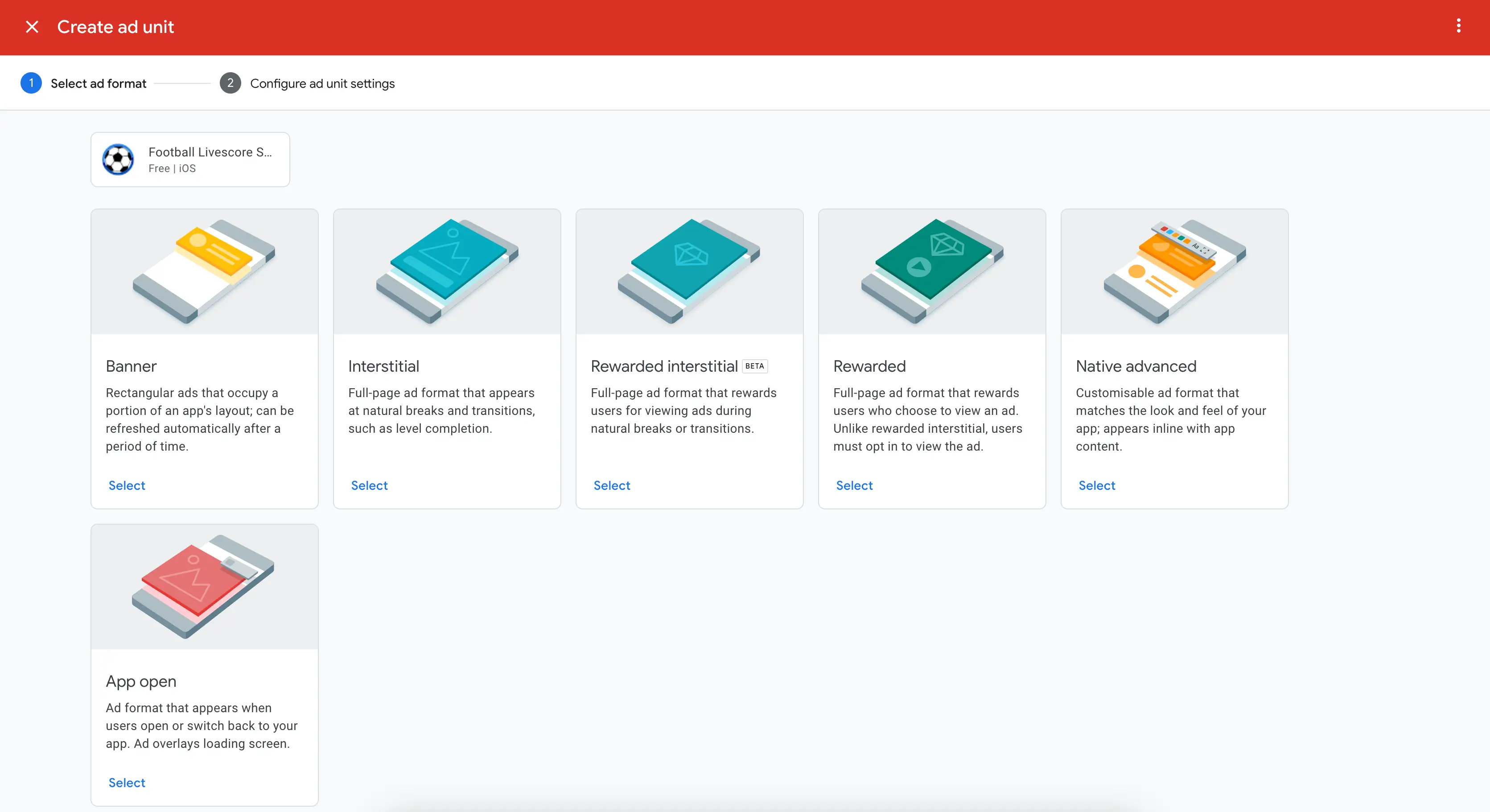
In-app advertising is the most widely used monetization model for free apps. You integrate with an ad network, allocate placements in your interface, and earn based on impressions or clicks. The model works at virtually any user scale, which is why it’s popular for apps that are still growing their user base.

Done well, in-app advertising generates passive income from every active user without requiring any transaction. Done poorly, it damages retention because intrusive ads push users to uninstall. The balance between revenue and user experience is the central challenge of this model.
The major ad networks include Google AdMob, Facebook Audience Network, AppLovin, Unity Ads, IronSource, Vungle, and InMobi. Each network has different CPM rates, fill rates, and ad format options. Most developers test two or three networks using mediation before settling on the combination that produces the best results for their specific audience.
Banner ads are fixed rectangular ads that sit at the top or bottom of the screen. They generate steady, low-intensity revenue and don’t interrupt the user experience. Their CPM rates are lower than other formats, but they run continuously while the user is in the app.
Interstitial ads are full-screen ads that appear at natural transition points, such as between game levels or after completing an action. They have higher visibility and command better CPMs than banners, but frequency matters. Too many interstitials increase churn.
Native ads blend into the surrounding content rather than appearing as distinct ad units. A promoted post in a news feed is native. A sponsored product in a shopping app is native. They generate higher engagement than display ads and are less likely to train users to ignore them.
Rewarded video ads are opt-in: the user chooses to watch a video in exchange for an in-app benefit, like extra lives, premium content, or virtual currency. This format has some of the highest CPMs available and maintains user goodwill because the interaction is voluntary. It’s particularly effective in games and apps where a virtual reward economy already exists.
Testing multiple formats and networks through mediation is how you find the optimal setup for your specific app and audience. Advertising revenue scales with your user base, which makes it a strong foundation to layer other monetization methods on top of as you grow.
In-app purchases give users the option to spend money on specific items or features rather than paying for the whole app. This model lets a developer serve both paying and non-paying users from the same product.
👉🏾 Other Appbuilder24 users also read: App Name Detailed Guidelines and Best Practices for Success
4. Using The Freemium Model
The freemium model makes the core app available at no cost while reserving advanced features or content for paying users. The free tier drives downloads and lets potential customers experience the product before committing to a purchase.
The free version needs to be genuinely useful. If it’s too limited, users leave without understanding why the premium version is worth paying for. If it’s too complete, there’s no reason to upgrade. Finding that balance, giving enough away to build habit while keeping enough behind a paywall to justify payment, is the core design challenge of freemium.
Spotify is the most cited example of freemium done well. Free users get access to the catalog but hear ads and can’t choose individual songs on demand. Premium removes ads, adds offline playback, and unlocks on-demand listening. The free version builds the habit; the premium version removes friction. The two tiers serve different users while keeping both in the product.
Freemium works best when you can restrict features that add real value without making the free experience feel broken. Productivity and entertainment apps with clear premium feature sets are natural fits. Apps where the core function is the entire product may not have enough to gate behind a paywall to make the model viable.
The freemium model lets you optimize for both scale and revenue. You maximize downloads because the entry cost is zero, and you maximize revenue from the subset of users who convert to premium. The conversion rate between free and paid is what you iterate on over time.
Read our detailed guide on the freemium model for more on how to structure your free and paid tiers effectively.
The Freemium model is a powerful mobile app monetization strategy that offers a free version of your app with premium features. By captivating users with a valuable free version, providing enticing premium features, and implementing seamless in-app purchases and subscriptions, you can generate revenue while maintaining trust with your user base.
Introducing Appbuilder24 App Maker, the game-changing platform that’s about to turn your app dreams into reality. Imagine being able to create an app that rivals Uber or launching your very own e-commerce empire. Got a website? Turn it into a sleek, user-friendly app in mere minutes. Whether you’re looking to create a radio app, a podcast platform, or anything in between, Appbuilder24 has got you covered with pre-built templates, stunning layouts, and features so advanced they’re practically from the future.
Make an app with Appbuilder24
Create premium apps without writing a single line of code, thanks to our user-friendly app builder. Build an app for your website or business with ease.
Appbuilder24 apps support the major monetization models described in this guide. You can enable AdMob, Facebook Audience Network, and other ad networks directly from your dashboard. In-app purchase and subscription features are available without custom development. Full instructions on how to set up each monetization option are in our knowledge base.
You don’t need to be a developer to build and monetize an app on Appbuilder24. The platform handles the technical integration for ad networks, purchases, and subscriptions. You configure it from the dashboard, publish to Android or iOS, and start earning from day one.
👉🏾 Other Appbuilder24 users also read: How to Increase Your App Installs
5. Using In-App Purchases
In-app purchases let users spend money on specific items, features, or content without paying for the full app upfront. For developers, it’s a way to earn from users who are genuinely engaged rather than treating everyone as a potential paid subscriber. There are a few distinct types of IAPs that work differently:
- One-time Purchases
One-time purchases give users permanent access to content or features in exchange for a single payment. A user buys additional game levels or unlocks a premium editing mode and owns that access indefinitely. There’s no recurring billing, which some users strongly prefer.
- Subscriptions
Subscriptions charge users on a recurring basis, typically monthly or annually, in exchange for ongoing access to premium content or features. Subscriptions create predictable recurring revenue for developers and tend to generate more total revenue per user over time than one-time purchases. They work best when the app delivers ongoing value that justifies the continuous cost.
Netflix As a Case Study
- Let’s take a page out of Netflix’s playbook for a moment. They’ve nailed the subscription model by offering an ever-expanding library of movies and series content, including but not limited to high-quality Netflix originals that you can’t watch anywhere else. This exclusive content not only attracts new subscribers but also keeps existing ones around.
- Netflix’s success story is a testament to the power of the subscription model when executed correctly. So, if you’re looking to build a sustainable, long-term revenue stream while fostering user loyalty, the subscription model might just be your golden ticket.
- Consumable IAPs
Consumable IAPs provide items that can be used or “consumed” within an app. Once used, the item is depleted, and users must purchase it again. Common examples are extra lives, virtual currencies, boosts, etc. Consumable IAPs encourage repeated purchases.
- Non-Consumable IAPs
Non-consumable IAPs are permanent digital items, content the user buys once and keeps. A new character skin, an e-book, a premium theme, or a specific level pack are all non-consumable. Unlike consumables, they don’t require repeat purchases, but they create a catalog effect where users expand what they own over time.
In-app purchases work because they’re optional. The app stays accessible to everyone regardless of spending, which keeps your user base broad. Revenue comes from the portion of users who choose to buy, and that portion can be quite small while still generating meaningful income if your total user base is large enough.
6. Building Paid Apps
A paid app charges users a one-time fee before they can download it. You earn from every install, and you don’t need to build a virtual economy or ad placement strategy around the product. It’s the simplest model to understand, though not always the easiest to execute well.
Pricing is where paid apps get complicated. Too high and you limit downloads significantly. Too low and you undervalue the product. A common approach is to launch at a price that reflects the app’s value and run occasional discounts or promotions to capture price-sensitive users without permanently lowering the price point.
The advantage over freemium is that you earn from every download rather than from a conversion rate. The disadvantage is that the paywall at the store listing significantly reduces your download volume. A free lite version alongside the paid app can help by letting curious users try before they buy without undermining paid conversion.
Paid apps work best for highly specialized tools where users have a clear, specific need and understand the value before downloading. Professional tools, productivity utilities with no obvious free alternative, and niche apps serving users who actively seek them out are all good candidates. Games and entertainment apps generally perform better with free plus in-app purchases.
7. Using Sponsorships Strategy
Sponsorships involve a brand paying to have their product or service featured within your app. Unlike network advertising, sponsorships are direct relationships negotiated with a specific brand. They often result in better revenue per impression because the brand values the association with your audience, not just the click volume.
- Sponsorship Via Ad Placements
Ad placement sponsorships give the brand specific positions in your interface: a banner at the top of a section, a loading screen, or a featured slot during a natural break in the experience. The placement is agreed in advance rather than served dynamically, which gives the brand more control over context.
Pricing can be structured as cost-per-thousand impressions (CPM), cost-per-click (CPC), or a flat fee for a defined period. Providing sponsors with clear performance data, how many users saw the placement, how many interacted with it, and what happened next, makes it easier to renew deals and justify your rates.
- Sponsored Content
Sponsored content is embedded within the natural flow of the app rather than appearing as a distinct ad unit. A sponsored listing in a category view, a promoted recommendation in a discovery feature, or a branded article in a content app are all examples. When done well, users find it less intrusive than display advertising.
Disclosure is important. Users need to be able to tell what is sponsored and what isn’t. Apps that obscure this line risk losing user trust, which costs far more in the long run than any individual sponsorship deal is worth.
- Sponsorship Business Models
Category exclusivity, where only one brand per product category can sponsor the app, commands a significant premium. Brands pay more for the assurance that a competitor won’t appear in the same context. “Official partner” positioning adds credibility to the brand’s association with your app.
Larger brands often want custom integrations that go beyond standard placements. Being willing to build these custom solutions opens up higher-value deals. A tiered sponsorship structure, from basic placements to exclusive partnerships with custom features, lets you serve both mid-market and enterprise advertisers.
Your user demographics and engagement metrics are what you’re selling. Brands pay for access to a specific audience that is actively using a product relevant to their category. The more precisely you can describe your audience and how engaged they are, the stronger your negotiating position.
8. Using Referral Programs
Referral programs turn existing users into a distribution channel. When users bring in their contacts, you acquire new users at a fraction of the cost of paid advertising, and those users typically have higher retention because they arrived through a personal recommendation rather than an ad.
User referral programs give each user a unique code or link to share. When a friend signs up through that link, both the referrer and the new user receive something of value. The double-sided reward structure is important: rewarding only the referrer creates weaker motivation than rewarding both parties.
Common referral incentives that work well:
- Giving referral rewards like premium features, virtual goods, or currency
- Entering successful referrals into prize drawings
- Providing referral bonuses that increase with more referrals
- Giving the referer a percentage of the referee’s in-app purchases
- Unlocking new app content or features
Running the program effectively:
- Make enrollment easy by detecting the first app open and prompting for access to contacts
- Allow referral links to be shared across multiple platforms like email, messaging, and social media
- Track referral data to optimize the program and rewards over time
- Communicate referral status within the app and through notifications
- Offer tiered rewards to encourage repeat referrals
- Run special referral promotions and contests to create excitement
A well-designed referral program compounds over time. Each successful referral produces a new potential referrer. As the user base grows, the organic spread through referrals can become a meaningful percentage of new installs without additional ad spend.
9. Using Ecommerce
Apps with an e-commerce component allow users to buy products or services directly from within the app experience. Revenue comes from the margin on what’s sold rather than from ads, purchases of virtual goods, or subscriptions.
E-commerce in apps takes several forms:
- Retail apps like Amazon, eBay, or Etsy allow users to browse and purchase physical products.e The app handles payment processing and order management.
- Gaming apps that sell virtual in-game items like skins, characters, power-ups, etc. These digital goods enhance the user experience.
- Subscription services like Netflix and Spotify offer premium content for a monthly fee. Users can sign up and access digital content from within the app.
Mobile’s share of total e-commerce continues to grow. Key patterns shaping how app e-commerce works today:
- Mobilizing the shopping experience – Having an app enhances convenience and allows impulse purchasing anywhere.
- Using apps as digital wallets – Storing payment information makes checkout faster compared to mobile web.
- Personalization – Apps can tailor recommendations and offers based on user data and behavior.
- Augmented reality – AR allows users to visualize products in new contexts prior to purchase.
The key to in-app e-commerce is reducing friction between the moment a user decides to buy and the moment the purchase completes. Stored payment methods, one-tap checkout, and immediate confirmation all contribute to higher conversion rates than a checkout process that requires multiple steps.
👉🏾 Other Appbuilder24 users also read:App Marketing Strategies to Increase App Downloads in 2026
10. Taking Advantage of User data Monetization
User data generated by an app can be a source of revenue beyond what users spend directly. This model requires careful handling: transparency with users, proper anonymization, and compliance with applicable privacy laws are non-negotiable. Here are the main approaches developers use:
- Data Collection Policies
Transparency is the foundation of ethical data monetization. Users need to know what is being collected, how it will be used, and who it will be shared with. Opt-in consent rather than opt-out defaults builds trust and, in many jurisdictions, is now legally required. Compliance with GDPR, CCPA, and other applicable regulations is not optional.
- Selling Aggregated User Data
Properly anonymized and aggregated data, where no individual user can be identified, can be sold to market research firms, advertisers, or industry analysts. Usage trends, behavioral patterns, and demographic signals across a large user base have real commercial value. The key distinction is that individual user information must never be identifiable in what you share.
- Data Monetization Models
Specific data monetization approaches that apps use:
- Data licensing – Companies pay to access aggregated app data. This can power targeted advertising, credit decisions, and more.
- Audience re-targeting – Apps share anonymized user data with ad platforms. This allows re-targeting users with related ads across sites.
- Demographic data products – Apps can sell demographic data packages on their audience, including info like gender, age, location, and interests.
- Predictive analytics APIs – Apps create APIs that provide insights from their data, which companies can integrate to enhance their services.
Data monetization is only sustainable when user privacy is genuinely protected. A data breach or a revelation that user data was mishandled can destroy user trust permanently. The revenue from data sales must be weighed against the reputational and regulatory risk of getting it wrong.
Key Performance Indicators (KPIs)
Tracking the right metrics tells you whether your monetization strategy is actually working or just producing activity. User Acquisition Cost (UAC) is the amount you spend to acquire each new user. Keeping UAC below the revenue that user generates over their lifetime is the fundamental economic test your app needs to pass.
Lifetime Value (LTV) estimates how much revenue the average user generates over the full period they use your app. Average Revenue Per User (ARPU) gives you a current snapshot of revenue across your active user base. Both numbers need to be tracked together: strong ARPU with poor retention produces a weak LTV, and vice versa. Improving either number by 10% has compounding effects on overall revenue.
Churn rate tells you what percentage of users stop using the app in a given period. High churn is expensive because you continuously need to replace the users who leave. Retention rate is the inverse: how many users come back. A high day-30 retention rate is one of the strongest indicators of a product that people find genuinely useful.
If you’re running in-app advertising, ad performance metrics including click-through rate (CTR), viewability, and CPM are the indicators that tell you whether your ad placement strategy is optimized. Low viewability on banner placements, for example, suggests the ads are being served in positions users don’t actually see.
Conclusion
The most resilient app businesses don’t rely on a single revenue stream. Platform policy changes, shifts in user behavior, and algorithm updates can all disrupt a monetization model you’re entirely dependent on. Building multiple revenue sources reduces that risk and creates a more stable base.
Key takeaways include:
Short Summary
- Advertising works best at scale, with many active users to generate ad impressions. Relying solely on ads is risky for smaller apps.
- In-app purchases allow you to monetize your most engaged users. But you need compelling virtual goods that deliver ongoing value.
- Freemium can maximize reach while monetizing a smaller subset of users. The free version must provide value to attract users.
- Paid apps generate revenue upfront but limit audience size. This works best for specialized apps that solve a specific need.
- Sponsorships and referral programs engage your user base in promoting the app. But you need an existing audience to leverage.
- Ecommerce revenues come from selling physical or digital goods. This requires significant development and operations infrastructure.
- User data monetization depends on access to data valuable to third parties. This raises privacy concerns and is restricted on some platforms.
Start with the model that fits your app and audience most naturally, then layer in additional revenue streams as your user base grows. A small app with 10,000 active users might earn primarily from ads and a few one-time purchases. At 500,000 users, adding subscriptions or a referral program becomes viable. Monetization should evolve with the product, not be set once and forgotten.