Mobile app marketing covers everything you do to attract users to your app, keep them engaged, and turn their attention into revenue. With millions of apps competing for attention on the major app stores, getting your app in front of the right people takes a deliberate strategy, not just a good product.
As a result, mobile app marketing has gained huge importance over the last decade. According to Data Ai (Formerly App Annie), consumers spent over $170 billion on apps and games in 2021 alone, representing 19% year-over-year growth. Mobile apps now account for the majority of time spent on digital media, surpassing desktop usage. Effective marketing is essential for apps to stand out, acquire loyal users, and achieve success.
Key benefits of mobile app marketing include:
- Direct access to customers – Apps enable brands to establish direct connections and relationships with customers by providing useful features and content.
- Personalization – Apps allow for personalized experiences and tailored messaging based on user data and behaviors.
- Ongoing engagement – Apps facilitate repeated interactions and encourage loyalty among users.
- Monetization – Apps present various revenue opportunities through subscriptions, in-app purchases, and advertising.
The strategies below are built around what actually works in 2026: audience clarity, store visibility, paid channels, earned media, and continuous optimization. Work through them in the order that fits your stage, and revisit regularly as your user base grows.
Powerful Strategies for Mobile App Marketing in 2026
1. Understand Your Target Audience
Every marketing decision you make should connect back to a clear picture of who your app is for. Apps that try to appeal to everyone end up with messaging that resonates with no one. Before you run a single ad or write a single description, spend time understanding the specific people your app was built to serve.
Focus your research on these areas:
- Demographics – Age, gender, location, income level, education, marital status, etc. Create a demographic profile of who is most likely to use and benefit from your app.
- Psychographics – Interests, values, attitudes, motivations, and lifestyles. Understand what your audience cares about and what motivates them to take action. Figure out where they spend their time online and offline.
- Behavior – Where and when do they use apps? How frequently do they download new apps? What goals are they trying to achieve? How can your app fit into their daily habits and routines? Observe how your target audience behaves as potential app users.
- Pain points – Identify the main problems, frustrations, and needs your audience faces. Find ways your app can provide solutions.
Build a profile of your ideal user that feels like a real person, not a spreadsheet category. The closer your marketing messages match how your target user actually thinks and speaks, the better your conversion rates will be at every stage. Treat audience research as ongoing work, not a one-time setup exercise.
2. Set Marketing Goals and KPIs
Clear goals and measurable KPIs keep your marketing efforts focused. Without them, it’s easy to run campaigns and activities without knowing whether they’re moving the needle.
Useful metrics to track include:
- Number of downloads – How many new users will download your app? Set both overall goals and campaign-specific goals.
- App activations – Of downloads, how many actually open or engage with the app post-install? High activations indicate strong user retention potential.
- User retention – How many users actively return to the app over time? Set goals for retention after 24 hours, 7 days, 1 month, etc.
- Average session length – How long is each user session? Longer sessions signal engagement.
- Revenue goals – For paid apps or in-app purchases, set clear revenue goals. Consider overall revenue, average revenue per user, and revenue by cohort.
- User engagement – How frequently do users engage with key app features? Which features drive the most engagement?
- Satisfaction scores – Collect user feedback and satisfaction ratings to gauge sentiment.
- Lifetime value – For subscription apps, estimate customer lifetime value. Grow this metric over time.
- Social sharing – Does the app incentivize social sharing or referrals? Set goals for shares, invites, etc.
Establish baseline numbers before scaling any campaign. Track KPIs consistently and compare results across channels. The data will show you where to put more effort and where to cut.
3. Optimize App Store Optimization
App store optimization (ASO) determines how visible your app is when people search the stores. With millions of apps on both Google Play and the App Store, strong ASO is often the difference between consistent organic downloads and none at all.
- Title and Description
Your app title and description are usually the first things a potential user reads. Lead with your primary keyword in the title and use your description to be specific about what the app does and who it helps. Avoid generic language that could describe any app in your category.
- Icons and Screenshots
App icons and screenshots do most of the visual selling in your store listing. Your icon needs to be readable at small sizes and distinctive enough to stand out in search results. Screenshots should show real screens, not illustrated mockups, with captions that explain what users are looking at.
- Ratings and Reviews
Star ratings directly affect both your conversion rate and your search ranking within the store. Prompt happy users to leave a review at natural moments in the app, right after they complete a task or reach a milestone. Respond to negative reviews with a specific fix or explanation rather than a generic apology. Consistently improving your rating should be an ongoing priority.
4. Leverage Paid Advertising
Paid advertising lets you control exactly who sees your app and scale what works. The channel you choose depends on your audience, but most app publishers benefit from testing a combination before committing budget heavily to any single platform.
Social Media Ads
- Facebook and Instagram ads make it easy to target users by location, age, gender, interests, and other attributes. You can run video ads, image ads, carousel ads, and more.
- LinkedIn ads are great for targeting professionals by job title, industry, skills, and other work-related criteria.
- Twitter ads let you target users by keywords, interests, behaviors, and conversations. Promoted tweets are a popular format.
- YouTube and TikTok ads help you reach engaged users interested in video content. You can promote app installs or video ads.
Search Engine Ads
- Google Ads helps you reach people searching for related keywords. You can run text ads at the top and bottom of search results.
- Microsoft Advertising and Yahoo Gemini also offer search ads. Focus on keywords relevant to your app.
Display Ads
- Display networks like Google Display Network, Facebook Audience Network, and more show your ads on third-party sites and apps. Target by context, user data, and placements.
- Retargeting ads engage users who already visited your website or app. Remind them to download your app.
Regardless of which platforms you use, tie your ad spend to actual conversions like app installs. Run A/B tests on your creative and targeting before scaling. Paid channels that don’t convert at a cost that makes sense for your model should be paused or reworked before you spend more.
5. Promote Through PR
Earned media, coverage that you don’t pay for directly, can generate download spikes that paid ads rarely match. Getting the right journalist, blogger, or publication to cover your app adds third-party credibility that your own marketing cannot replicate. Here’s how to approach it:
Focus on Earned Media
- Pitch your app to relevant media outlets like app review sites, tech blogs, industry publications, and business magazines. Offer them an exclusive first look or demo.
- Identify reporters who cover mobile apps and tech. Build relationships with them by being helpful and pitching relevant story ideas.
- Schedule briefings to showcase your app and explain key features and benefits. Make it easy for media to experience your app firsthand.
- Tie news pitches to timely trends, events, or app updates. Pitch different story angles to extend media coverage.
- Promote newsworthy app accomplishments like milestones, awards, or new funding.
Utilize Influencer Marketing
- Identify influencers in your niche who align with your brand and have engaged followers. Provide them early access to test your app.
- Ask influencers to post reviews, tutorials, or content featuring your app. Compensate them accordingly.
- Partner with nano-influencers who have highly targeted, niche audiences. Their reviews can be very impactful.
- Guest post on industry blogs, partner with influencers on co-branded content, sponsor influencer videos, or work with them on giveaways or contests.
Encourage App Reviews
- Make it easy for happy users to leave reviews. Prompt at optimal times within the user journey.
- Respond professionally to negative reviews and seek solutions or improvements.
- Highlight top reviews on your website, social media, and other marketing materials.
- Analyze reviews to identify enhancements that will delight users. Reviews provide valuable feedback.
- Reply to reviews thanking users for taking the time. This encourages future reviews.
- Never attempt to manipulate reviews through fake accounts or other deceptive tactics. Maintain trust.
6. Drive Referrals
Word-of-mouth is still one of the most efficient ways to grow an app. People trust recommendations from people they know far more than they trust ads. A structured referral program turns your existing users into a distribution channel.
- Implement a referral program: Offer incentives for existing users to refer friends and family. This could be a discount, free premium features, or cash rewards. Make sure the incentive is enticing enough to motivate sharing. Track referral codes to see which users are referring others.
- Make sharing easy: Add social sharing buttons within your app. Allow users to easily share about the app via Facebook, Twitter, email, text message, etc.
- Promote social sharing: Run contests and campaigns to incentivize social shares. “Share to unlock a reward” or “Post about our app for a chance to win a prize” can help drive viral growth.
- Use influencer marketing: Partner with relevant influencers, bloggers, and media outlets to have them share your app with their audience. Offer free access or compensation in exchange for posts, reviews, and referrals.
- Distribute branded collateral: Create business cards, stickers, posters, or flyers that users can share with friends to help spread the word. Include a QR code, link, or app store badge to facilitate downloads.
- Notify engaged users: If certain users are highly engaged with your app, reach out to them directly and ask them to share with friends and family. Your most satisfied users can become powerful brand advocates.
- Share updates and news: Whenever you have major app updates, new features, promotions, or news – blast this to existing users to encourage organic sharing and referrals.
The best referral setups make sharing feel natural rather than transactional. Give users a reason to share that actually benefits their friends, not just a coupon for themselves. Track which referral sources are producing installs and double down on those.
7. Retarget Existing Users
Getting a user to download your app is only the beginning. Keeping them engaged over time is what drives lifetime value. These channels let you reach users who are already in your app and bring back those who have gone quiet.
Push Notifications
- Send timely and relevant push notifications to re-engage users. But avoid being too aggressive or spammy.
- Segment your user base and tailor notifications by user behaviors and interests.
- Test notification content, timing, triggers, and more to optimize open and engagement rates.
- Promote new app features, content, and offers through push notifications.
In-App Messaging
- Display contextual in-app messages based on user actions and app events.
- Encourage downloads, purchases, registrations, and other conversions.
- Communicate new features, helpful tips, and relevant promotions.
- Test different in-app message types, designs, and placements for optimal results.
- Build an email list by encouraging app users to opt in. Offer an incentive for sign-ups.
- Send promotional emails about app updates, features, content, and special offers.
- Segment your list and personalize email content based on user attributes and behaviors.
- A/B test email content, frequency, timing, and more. Measure open, click-through, and conversion rates.
- Leverage automation and behavioral triggers to send emails based on user actions.
Staying in front of existing users costs far less than acquiring new ones. A well-timed push notification or a relevant in-app message can bring a lapsed user back. Test different timing, content, and triggers to find what keeps your specific audience engaged.
8. Analyze and Optimize
Marketing without measurement is guesswork. Regular analysis of your data tells you what’s working, what’s wasting budget, and where users are dropping off. Build optimization into your routine rather than treating it as a periodic audit.
Review analytics regularly: Pull your core metrics at a set frequency: installs, activations, churn rate, session length, lifetime value, and revenue per user. Segment by acquisition channel to understand which sources bring users who actually stay and spend, not just those who install and disappear.
A/B test consistently: Run tests on ad creative, store listing copy, screenshots, onboarding flows, and in-app messages. Change one variable at a time so you know what actually caused a change in results. Apply what you learn and move to the next test.
Reduce friction in the user experience: Look at where users drop off in your onboarding flow and fix the biggest blockers first. A simpler registration process or a clearer first-run experience can meaningfully improve your activation rate without any additional ad spend.
Segment and personalize: Generic messages to your entire user base perform worse than targeted messages to specific segments. Use behavioral data to send the right message to users based on what they’ve done in the app, what they haven’t done yet, or how long they’ve been inactive.
Cut what doesn’t convert: Review campaign performance frequently and reallocate budget from underperforming channels to those producing measurable results. Don’t let underperforming campaigns run out of inertia. Pause them, diagnose the problem, and either fix them or redirect the spend.
Read what users say: App store reviews and social mentions surface problems that your analytics won’t. Set aside time each week to read recent reviews, respond to the ones that need a reply, and flag recurring issues for your product backlog. Users who take the time to write a review are telling you exactly what matters to them.
The apps that sustain growth over time are the ones that treat optimization as a permanent habit. Each round of testing and analysis compounds over time, producing a marketing setup that gets more efficient as it matures.
9. Make Your App Screenshots Speak Volumes
Your App Store screenshots function as a visual pitch. Most users make a download decision within seconds of landing on your listing, and the screenshots are the first thing they look at. If the screenshots don’t immediately communicate value, most visitors will move on without reading your description.
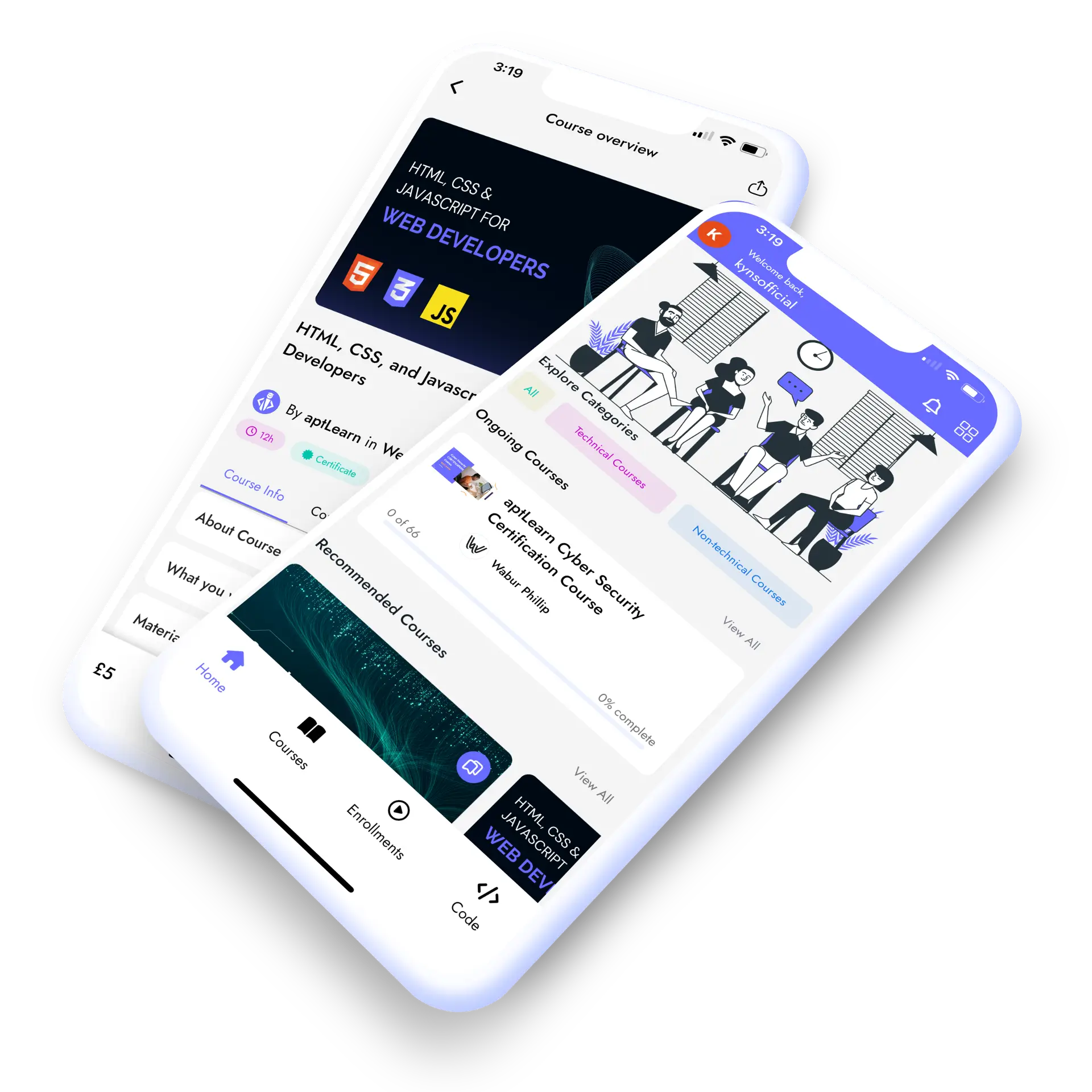
The screenshot shown above is from our partner app, aptLearn, rendered using the PixelTrue Mockup Tool. Clean interface design and realistic device frames both contribute to how professional the listing looks.
Screenshots occupy a large portion of your visible listing space in App Store search results. Localizing screenshots for different languages has been shown to improve conversion rates significantly, opening up markets that English-only listings don’t reach. The quality of your screenshots also shapes perception of the app itself. Poor visuals suggest a poor product, even if the app is excellent.
Users compare your screenshots against competitors before deciding whether to download. A strong visual advantage in your category lowers the effort required to convert visitors and can reduce your cost per install when running paid campaigns. The same screenshots you use in your store listing also work across social ads, landing pages, and press outreach.
10. Mobile App Marketing using Video demos
Video is one of the highest-converting formats in app marketing. A short demo that shows your app in action, with real screens and a clear use case, does more to communicate value than any amount of descriptive text. Apple’s 1984 Macintosh commercial set a template that still holds: show the product doing something that changes how people live or work, and do it in a way that sticks. Check out the Appbuilder24 platform walkthrough as an example of explaining a product clearly through video.
When it comes to mobile app marketing, the rules of the game are no different. Your app isn’t just a bunch of code; it’s a solution, an experience, a part of your users’ lives. And what better way to introduce it than through a compelling video demo? A well-executed video can do wonders for your app’s visibility and user engagement. If you want real-world context on what’s working right now, the State of Interactive Demos report by Supademo breaks down the formats and engagement patterns teams are using to turn viewers into qualified leads.
Your app preview video in the store listing is often the most underused real estate in the entire listing. Most publishers skip it entirely. Filling that slot with even a simple screen-recording demo gives you an edge over competitors who leave it blank.
11. Create interesting content
Content marketing builds the audience before you ask them to download anything. Publishing useful material, whether it’s guides, tutorials, comparison articles, or social posts, earns attention from people who are already searching for solutions your app provides. Start building that content base before launch so you have momentum from day one, not from zero.
The best-performing content shows a problem being solved, not a product being advertised. If your app helps users with a specific task, create content that addresses that task directly. Short-form video works on Instagram and TikTok. Long-form guides work for search. The goal is to produce material that your target user would find genuinely useful, even if they haven’t heard of your app yet. That kind of content builds trust before the download ever happens.
👉🏾Other Appbuilder24 Users also read: How to Increase Your App Installs
12. Harness The Power of Review
Reviews are one of the few forms of feedback that arrive without you having to ask for it. A well-rated app converts store visitors at a higher rate and ranks better in search. Most users form their opinion of an app’s quality within seconds of looking at the star rating and reading the first few reviews. When you have active users, prompt them to leave a review at the right moment: right after they complete an action they came to the app to do.
Negative reviews are not something to ignore or dispute. They tell you, publicly, what isn’t working. Respond to them directly, describe what you’ve fixed or plan to fix, and thank the user for the feedback. Developers who respond professionally to criticism often see those reviewers update their rating. Appbuilder24 apps include built-in review and rating features that make it straightforward to prompt users at the right time without requiring any custom development.
Wrapping Up
An app without a marketing strategy is just a listing in a crowded store. These 12 strategies cover the full lifecycle of app growth, from understanding your audience and optimizing your store listing to retargeting existing users and building a review base. None of them are one-time tasks.
The apps that grow consistently are the ones that treat marketing as an ongoing function rather than a launch campaign. Every data point, user review, and A/B test result is feedback that improves your next decision. If you’re working on growing organic installs, start with ASO and content, build a review base, and layer in paid channels once you have something to measure against.
Take a look at any of the most successful apps, from Apple Music, aptLearn App, and Uber. Notice that they all have a knack for creating long-term relationships with their user base. Even for apps that don’t operate on a SaaS model, building relationships with users is still highly valuable.